The RPG-like quest structure, making a sixth ranger a regular, and how it crossed the ocean to become Power Rangers. We list only what the sources confirm.
Setting
A new subgenre — “fantasy Sentai” — was born right here.
It built a full fantasy world — ancient tribes from 170 million years ago, magic, and guardian beasts — opening the "fantasy Sentai" subgenre. Its dinosaur motif would later carry into Abaranger, Kyoryuger and Ryusoulger.
Confirmed Setting
It refuses, on purpose, to say “when” this is.
Per producer Shinichiro Shirakura, head writer Noboru Sugimura aimed for a world that — like Dragon Quest — audiences accept even when the era is left vague. The show’s deliberately unplaceable, mythic setting comes from that.
Confirmed Production
After the edgy predecessor, it swung back toward kids.
Where the prior series Jetman skewed older, Zyuranger swung back to a bright, family-facing tone for the franchise’s core (younger) audience — while still trying new things. Producer Shirakura describes building "a newness different from Jetman" with writer Sugimura.
Confirmed Production
It beat Jurassic Park to the boom by half a year.
The dino motif is sometimes credited to Jurassic Park — but that film opened in Japan about half a year after Zyuranger ended. Toei launched the dinosaur Sentai while knowing only that "Spielberg is apparently making a dinosaur movie," effectively getting ahead of the boom.
Confirmed Production
A turning point for the series on several fronts.
A regular sixth warrior, a full fantasy world, and the start of overseas adaptation (the US Power Rangers): Zyuranger was a turning point on several fronts. The regular sixth ranger and the export model in particular set the template for Sentai to come.
Confirmed Scrapped
The phantom title: “Kyoryu Sentai Saurusman.”
An early working title is said to have been "Kyoryu Sentai Saurusman," putting dinosaurs front and centre (this rests on fan documentation rather than a hard primary source — treat as debated). It ultimately settled on the "Jyu/beast" wordplay.
Likely Cast
“Line up ten of them and each one shrinks.”
Yuta Mochizuki (Geki / Tyranno Ranger) knew only the original Goranger and recalls thinking "ten of them? Line up ten and each one shrinks." A JAC member who had worked mainly in musicals with no action experience, he says playing a fight scene on a roller-coaster rail in episode 2 gave him the confidence that he could handle most things.
Confirmed Cast
The youngest heroine, paying tribute years later.
Reiko Chiba (Mei / Ptera Ranger) was the youngest Sentai heroine of her time. Years later, the day after the death of Machiko Soga (Bandora), she posted a tribute on her own site recalling that Soga "spoke with me even when I was a clueless newcomer."
Confirmed Reception
The prototype of the Sentai “tear-jerker” lives here.
Dragon Ranger / Burai, the sixth warrior, is revived only to carry a rapidly shrinking lifespan. Episode 34 ("Burai, live!") and his final episode — vowing to fight to the end as a Zyuranger and entrusting Earth and its children to his brother Geki — are still passed down as tear-jerker scenes, prized as the prototype for the tragic regular sixth ranger.
Confirmed Reception
With hardcore fans, though, it landed coolly — they say.
Among hardcore fans at the time, however, reception is said to have been lukewarm. Having swung firmly toward kids, some who wanted Jetman-style edge found it tame — a genuinely divided point, and one that reads very differently to those who watched it as children.
Likely Reception
A rare finale where the villains mostly survive.
Unusually for Sentai, most of Bandora’s senior villains survive to the finale rather than being killed off. By not following the standard "defeat the lieutenants one by one" structure, it stands slightly apart in construction too.
Confirmed Production
One voice for the beasts, one hand on the score.
The pilot was directed by Shōhei Tōjō. Eizō Maruyama voiced the Guardian Beast Tyrannosaurus, Daizyujin and Gouryujin, and Akihiko Yoshida composed the music.
Confirmed Cast
Those on-screen spells were mostly her own ad-libs.
Most of the spells chanted on screen by Machiko Soga, who played the witch Bandora, were her own ad-libs.
Confirmed Cast
The actor inside the suit wasn’t the planned one.
Seiji Takaiwa was slated as the suit actor for Tyranno Ranger, but owing to scheduling conflicts such as the stage play "Black JAC," he reportedly performed the role himself only in the first four episodes and the last few.
Confirmed Scrapped
Yellow was first conceived as a woman.
In the early planning stage, Yellow (Boi) was conceived as a female character; in the aired series this was changed to the male Boi.
Confirmed Analysis
The real invention wasn’t fantasy — it was a vessel you can refill every year.
In our reading, the real invention of Zyuranger is less the "fantasy Sentai" banner than its structure: it let mythic time and merchandise time coexist on one screen. The deliberately vague, mythic world (the Dragon Quest–like design Sugimura aimed for) preserves the show’s gravity, and onto that base it bolts the things a yearly franchise needs — toys built for annual renewal, a regular sixth warrior in Dragon Ranger, and a second robot in Gouryujin. That ability to add warriors and product after the fact without breaking the myth is, we argue, the prototype for the "one added warrior and robot a year" pattern Sentai has repeated ever since. Zyuranger is a turning point not because it started fantasy, but because it perfected a vessel that could be refilled every year.
Likely Editorial notes
The series' first regular sixth warrior
Dragon Ranger / Burai (introduced in ep.17) was the first additional warrior made a series regular — the origin of the "sixth ranger" format that has continued for over 30 years.
Mecha framed as gods
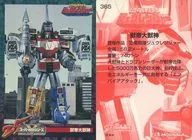
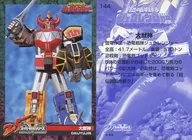
The giant robots were framed as divine "Guardian Beasts," an unusual choice for the era and the source of the name Daizyujin.
The shift from "-Man" to "-Ranger"
Replacing the earlier "-Man" team-name format with "-Ranger", this entry set the naming convention that became standard for many later Super Sentai series.
Why dinosaurs were chosen
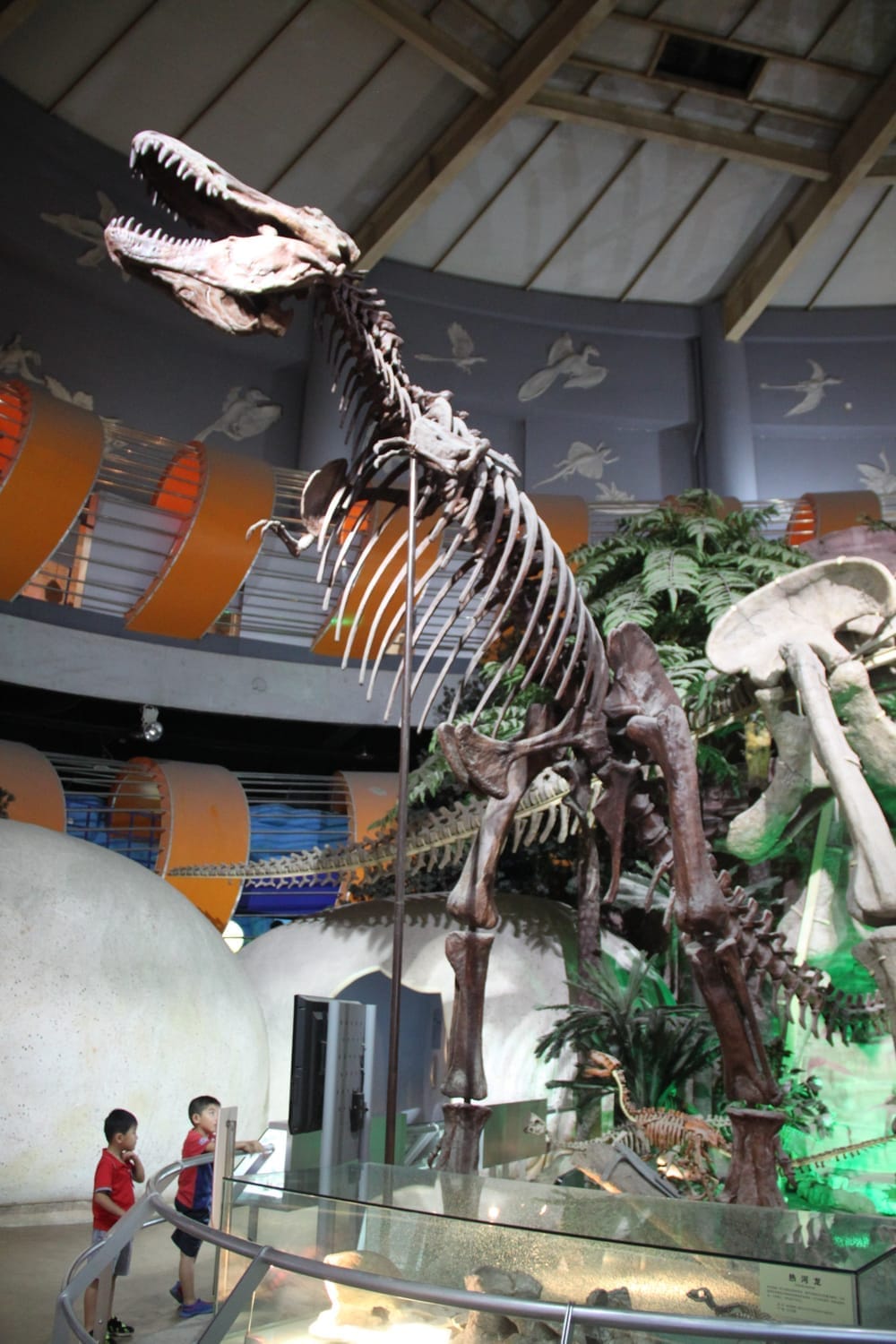
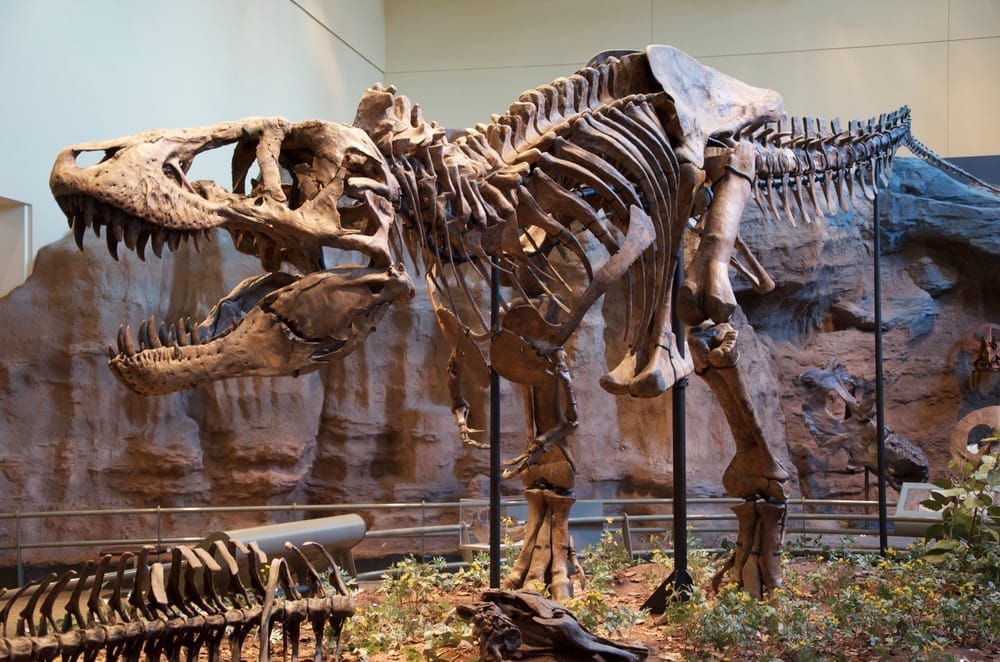
Dinosaurs were picked because, as prehistoric creatures, they never go out of fashion, while embodying the "big and strong" beings children admire — with the novel Jurassic Park and its announced film adaptation in the air at the time.
The combining robot topped the series in toy sales
Toy sales exceeded 9 billion yen, and the combining robot Daizyujin is reported to have recorded the top sales among Super Sentai combining robots at the time.
Theme songs and core staff
The opening "Kyōryū Sentai Zyuranger" was sung by Kenta Satō and the ending "Bōken Shite Rappapīya!" by Pythagoras. The head writer was Noboru Sugimura.
The origins of the Dora Monsters
The Dora Monsters created by Bandora's gang are largely based on Western folklore and mythological creatures (a sphinx among them). Layering Western-fantasy designs over the dinosaur theme is part of what gives the show its distinctive world.
The "sixth warrior" was prepared in secret — even inside Toei
A sixth warrior broke the franchise's "five as one" formula — almost a foul move — so its preparation was kept secret even within Toei. Per producer Shinichiro Shirakura, the aim was a rival in the vein of Mad Gallant from Jaspion; to differ from Bio Hunter Silva of Bioman, it was made a warrior in the same format as the core five. Planned at first for this show alone, it became a yearly fixture after Dragon Ranger drew so much popularity.
What giving the robots character achieved
Producer Takeyuki Suzuki has said that depicting the robots not as machines but as strongly characterised "Guardian Beasts" made children feel close to them, and widened the creative freedom around robot premises in the shows that followed.
Head writer Noboru Sugimura and the "RPG quest" structure
The revival of sealed heroes, divine revelations, and the hunt for the "five legendary weapons" — the early structure reads as an adaptation of the quest format of Dragon Quest and Final Fantasy, the games children were devoted to at the time. Head writer Noboru Sugimura later moved into games, writing Resident Evil and Onimusha; the logic of this show's item-collection drama already hints at it.
A myth that closes as the "Dino Chronicle"
In the finale the warriors' deeds are bound shut as a single chronicle, the "Dino Chronicle", and the six ascend to the heavens as light. For all its present-day action, the show was at heart a myth meant to be handed down — casting its villain as a "witch" was part of a deliberate design to tell good and evil in the form of a fairy tale.
A "return to children" after Jetman
The preceding Jetman opened up older teen-plus fans with in-team romance and emotional drama. Zyuranger's role was to pull the target back to preschool-and-elementary children: it deliberately dropped complex romance and foregrounded a "mythic battle of gods and demons" and a "pure hero who saves children" — a direction inherited by the next series, Dairanger.
The toy that crossed the sea: the origin of the Megazord boom
Saban Entertainment acquired the non-Asian rights (its contract with Toei is dated 1992) and built Power Rangers by reusing the battle footage while shooting only the drama in the US. After its August 28, 1993 Fox Kids premiere it became a smash; the combining gimmick of the DX Daizyujin is credited with helping drive the "Megazord" craze in North America — seen as one of the starting points from which a niche Japanese hero robot spread into the global boys'-toy market.
The mentor — White Wizard Barza
A sage who has fought Bandora's band since 170 million years ago and the guide who revived the Zyurangers in the present day at the Earth's hour of need. Played by Jun Tatara, he blends into modern life as an apartment caretaker, showing a comic side while supporting the warriors from behind with magic and ancient knowledge.
Spoilers (opening reveals endings)
Burai's limited lifespan第17話〜
Burai had in fact died 170 million years ago, and was revived with a limited lifespan by the life spirit Clotho. After his "Room of Time" is destroyed, his life burns out, and he dies before the final battle, entrusting his power to Geki.
The finale
Bandora's son Kai is revived alongside Great Satan but dies a second time, causing Bandora to lose her power. The gang is resealed in a jar and cast to the ends of the universe.
FAQ
Did Power Rangers use footage from Kyōryū Sentai Zyuranger?
Yes. The US series Mighty Morphin Power Rangers (1993) was built by reusing this show’s suited-action and giant-robot footage, with only the drama scenes shot anew in America. Reused mainly: Suited action & battle footage, Daizyujin → Megazord, Dragon Caesar → Dragonzord, Bandora footage (M. Soga) → reused as Rita Repulsa.
How many episodes is Kyōryū Sentai Zyuranger, and when did it air?
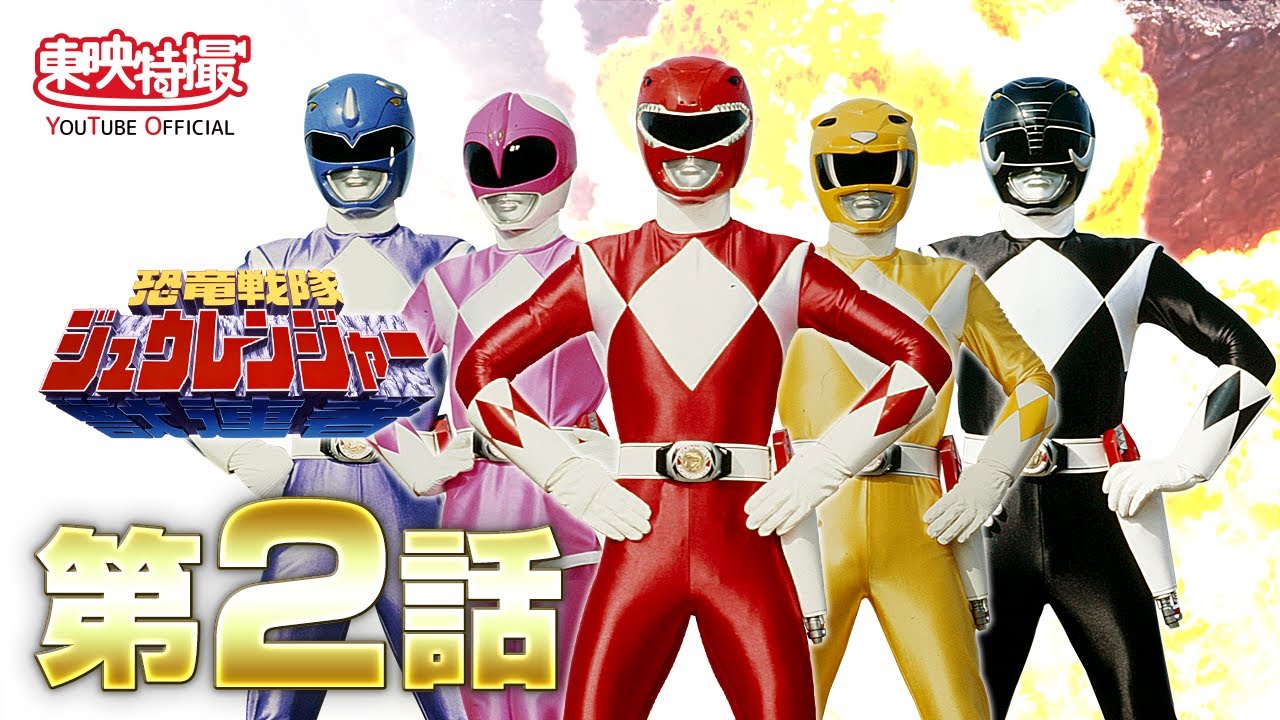
50 episodes. It aired from February 21, 1992 to February 12, 1993.
Who is the “sixth warrior” of Kyōryū Sentai Zyuranger?
Dragon Ranger. Green DragonRanger joins from episode 17 — the franchise’s first "sixth warrior".
Can I still buy vintage Kyōryū Sentai Zyuranger toys?
Yes. Figures and DX toys still circulate on Japan’s second-hand market (Suruga-ya, Mercari, Yahoo! Auctions). Real listings are linked throughout this page; overseas buyers can follow our buying guide.




![【中古】恐竜戦隊 ジュウレンジャー [レンタル落ち] 全10巻セット [マーケットプレイスDVDセット商品]](https://thumbnail.image.rakuten.co.jp/@0_mall/2doriem/cabinet/y20260325-22/yhb06x9d8hj8.jpg?_ex=600x600)

![【中古】恐竜戦隊ジュウレンジャー VOL.6[DVD] [レンタル落ち] ※ケースなし、ジャケットとディスクのみ](https://thumbnail.image.rakuten.co.jp/@0_mall/kobaco-003/cabinet/20260413-2/b071472t6z.jpg?_ex=600x600)
![恐竜戦隊ジュウレンジャー DVD-COLLECTION VOL.2 [ 八手三郎 ]](https://thumbnail.image.rakuten.co.jp/@0_mall/book/cabinet/0298/4988101220298_1_2.jpg?_ex=600x600)
![恐竜戦隊ジュウレンジャー DVD COLLECTION VOL.2 [DVD]](https://thumbnail.image.rakuten.co.jp/@0_mall/mifsoft/cabinet/298/dstd-20663.jpg?_ex=600x600)


![食玩 SMP [SHOKUGAN MODELING PROJECT] ドラゴンシーザー クリアカラーVer.](https://thumbnail.image.rakuten.co.jp/@0_mall/shikinotakara/cabinet/12116306/imgrc0105344386.jpg?_ex=600x600)


![【新品/在庫あり】[バンダイ] 恐竜戦隊ジュウレンジャー アクションヒーロー ティラノレンジャー](https://thumbnail.image.rakuten.co.jp/@0_mall/outletplaza/cabinet/485/4582769793875.jpg?_ex=600x600)
![【送料無料】[バンダイ(BANDAI)] DXROBO UNIVERSE シリーズ 色:大獣神](https://thumbnail.image.rakuten.co.jp/@0_mall/dragondash/cabinet/rakub200_0049/b0dthcjcvb00.jpg?_ex=600x600)

![スーパー戦隊 DXロボチャーム&チョコボーロ [3.大獣神]【ネコポス配送対応】【C】※お菓子は付属しません。](https://thumbnail.image.rakuten.co.jp/@0_mall/auc-toysanta/cabinet/040401/bs-5l390018m3-003.jpg?_ex=600x600)


![NO.16[SSR]:恐竜戦隊ジュウレンジャー](https://cdn.suruga-ya.jp/pics_webp/boxart_m/gu420710m.jpg.webp)
![1-D14[V]:恐竜戦隊ジュウレンジャー](https://cdn.suruga-ya.jp/pics_webp/boxart_m/g3726604m.jpg.webp)
![DX6-076[CP]:恐竜戦隊ジュウレンジャー ハウリングキャノン](https://cdn.suruga-ya.jp/pics_webp/boxart_m/g8746197m.jpg.webp)
![GB.1-053[R]:大獣神](https://cdn.suruga-ya.jp/pics_webp/boxart_m/g6645171m.jpg.webp)
![RS-545[SR]:究極大獣神(自販機版)](https://cdn.suruga-ya.jp/pics_webp/boxart_m/g8932221m.jpg.webp)
![RS-545[SR]:究極大獣神](https://cdn.suruga-ya.jp/pics_webp/boxart_m/g8932220m.jpg.webp)
![RS-243[N]:獣奏剣](https://cdn.suruga-ya.jp/pics_webp/boxart_m/gl144959m.jpg.webp)



![恐竜戦隊ジュウレンジャースーパー戦隊超全集【電子書籍】[ てれびくん編集部 ]](https://thumbnail.image.rakuten.co.jp/@0_mall/rakutenkobo-ebooks/cabinet/5945/2000001955945.jpg?_ex=600x600)
![スーパー戦隊 (学研の図鑑) [ 東映株式会社 ]](https://thumbnail.image.rakuten.co.jp/@0_mall/book/cabinet/7882/9784054067882.jpg?_ex=600x600)
