A rivalry with Street Fighter II, the division of labor among writers, and a finale set fifty years later. We list only what the sources confirm.
Setting
Chinese culture, threaded through world and music alike.
To set itself apart from Zyuranger’s fantasy, the show unified everything — characters, world, music — around Chinese culture. Designer Takeshi Nonaka has suggested the choice rode the era’s wave of Chinese culture entering Japan, such as the 1993 oolong-tea boom.
Confirmed Cast
The sixth warrior was a sixth-grader at the time.
The sixth warrior, Kiba Ranger / Kou, was played by Hisashi Sakai — a sixth-grader during the broadcast. Having a child actor be the youngest transforming hero in the whole Super Sentai series set the show apart.
Confirmed Reception
It breaks the Sentai formula, one piece at a time.
It deliberately broke the Sentai formula: telling through images rather than exposition, running two-part stories with no giant-robot fight, having the commander part ways with the team mid-story. That risk-taking within a kids’ slot is why it’s now re-appraised as "a Sentai grown-ups can enjoy."
Confirmed Production
Each writer gives the episodes a distinct color.
Head writer Noboru Sugimura carried over from Zyuranger, with Eiji Kawamura composing. Sub-writers were assigned their own characters — Toshihisa Arakawa on the "Three Gorma Stooges," Kunio Fujii on the tragic Kujaku, Toshiki Inoue on the magic-fist warrior Jin — giving the episodes distinct authorial flavors.
Confirmed Setting
A third force appears — neither ally nor enemy.
Daijinryu, who appears late in the story, is drawn as a being beyond good and evil. Judging that the very war between the Dairangers and the Gorma threatens the whole universe, it sides with neither and moves to wipe out both — a transcendent third force, neither ally nor enemy, rare in Sentai.
Confirmed Reception
A finale that deliberately refuses a clean triumph.
The finale of all 50 episodes (ep. 50, "Here we go!") is famous for refusing a clean, triumphant ending. After the long war of qi and sorcery reaches a pause, the show jumps fifty years ahead, where a new generation of young people become the next Dairangers and the fight resumes across the generations — closing on that lingering note.
Confirmed Setting
They turn qi into power, each in their own kung-fu.
The Dairangers convert "qi" — the energy of the natural world — into "kiryoku" inside the body, then fight with the Chinese martial art each one specializes in. The five read as distinct kung-fu styles because that premise sits underneath them.
Confirmed Setting
The enemy monster was once one of the Dai tribe.
The Gorma monster Gara is revealed in-story to have been born of the Dai tribe — a childhood friend of the sacred beast Kujaku (the peacock). Giving an enemy a Dai origin is of a piece with the show’s refusal to split good and evil cleanly.
Confirmed Setting
A family story is buried at the enemy’s core.
Shadam, one of the three Gorma officers, is also the father of both Akomaru and Kou (KibaRanger). Placing a blood tie to key characters at the enemy’s core lets a family story overlap the endgame conflict.
Confirmed Production
Behind it: a rivalry with Street Fighter II.
Producer Jun Kaji of TV Asahi has said the choice to build the show on Chinese martial arts came partly from a sense of rivalry with Street Fighter II, the fighting game then at its peak.
Confirmed Production
Every suit actor was a real Chinese-martial-artist.
Every suit actor for the transformed heroes was drawn from people with real Chinese-martial-arts training — for a show that put kung-fu up front, the action was specialized from the ground up.
Confirmed Production
The first Sentai to composite CG in its opening.
Dairanger is the first Super Sentai series to use CG compositing in its opening sequence.
Confirmed Scrapped
The phantom title: “Chūka Sentai Chinaman.”
At the planning stage the working title was "Chūka Sentai Chinaman." Tatsuya Nōmi, who played ShishiRanger/Daigo, recalls that the first name he was given was indeed "Chinaman."
Confirmed Scrapped
Red was originally cast as a different actor.
Casting originally had Keisuke Tsuchiya as RyuRanger/Ryo and Keiichi Wada as KirinRanger/Chi; this was later changed, and in the aired series Wada plays RyuRanger/Ryo.
Confirmed Cast
That denim jacket was the actor’s own.
In the finale, the denim jacket Keiichi Wada wears in the scene where the five part ways was his own.
Confirmed Cast
What he spat from his mouth wasn’t mud — it was chocolate.
In the scene where Shadam (played by Rintarō Nishi) is stabbed, what he actually spat from his mouth was not mud but chocolate flakes.
Confirmed Reception
At the time, it was billed as the 15th-anniversary work.
At the time of broadcast Dairanger was billed as the franchise’s 15th-anniversary work. The count later shifted: from Ohranger onward the anniversaries were reckoned from Himitsu Sentai Gorenger, marking a 20th instead.
Confirmed Reception
The goal was to surpass Jetman itself.
Producer Jun Kaji has said his aim was to surpass Chōjin Sentai Jetman — the series two years earlier — in its ensemble drama and its willingness to break form.
Confirmed Analysis
A motive — “be different” — quietly became the show’s spine.
In our reading, what makes Dairanger distinctive is that it elevated a production motive — "differentiate from the previous show" — into the work’s actual theme. The wholesale switch to Chinese culture that designer Takeshi Nonaka describes is only the starting point; from two-part stories with no giant-robot fight, to image-led direction that avoids exposition, to Daijinryu as a third force siding with neither good nor evil, to a finale that refuses a triumphant ending and leaps fifty years ahead, the show dismantles the Sentai formula one piece at a time. An outward reason (be different) quietly becomes an inward theme (make breaking the pattern the very spine of the show). That consistent posture of deviation, we argue, is why it is now re-appraised as "a Sentai grown-ups can enjoy."
Likely Editorial notes
An experiment without a clear leader
Rather than the usual "Red = leader" structure, it was told as an ensemble piece — a bold departure for the series at the time.
Kiba Ranger, the youngest extra warrior
Kiba Ranger / Kou, introduced from ep.17, is an additional warrior transformed by a boy of just 9–10.
A look and sound that is "Chinese-like, yet not"
To break from earlier fantasy entries, the show unified its characters, world and music around oriental motifs — its score layering Chinese and Japanese percussion over electric instruments, a sound unlike any other in the franchise. The opening theme was composed by Katsuo Ohno.
Conceived against the era's fighting-game boom
Made when competitive fighting games were a social phenomenon, it built its premise around martial arts and "qi" — its move-and-stance choreography resonating with kids' arcade experiences of the time.
Choreography built on real Chinese martial arts
The kung-fu the five use draws on real Chinese martial arts, and even their roll-call poses reflect each character's style. Every suit actor cast for the transformed heroes was an experienced practitioner of Chinese martial arts — setting the show apart through its action.
Breaking the formula on purpose, for the 15th anniversary
Positioned at the time as the franchise's 15th-anniversary entry, the show repeatedly set out to break patterns it had long followed. The actor who played Shoji / Tenma Ranger has recalled that the five leads took it on with a determination to "play something different from before".
Writers split the story by arc — a one-of-a-kind experiment
Noboru Sugimura laid down the main throughline while individual writers each took whole arcs — Kunio Fujii the "Peacock" arc, Toshiki Arakawa the "Gorma Three Kids" arc, Toshiki Inoue the "Fist-Sage Jin" arc. Assigning the story by writer this way is cited as the first, and so far only, such experiment in Super Sentai.
A working title of "Daikenja", and the phantom "Chinaman" plan
According to staff, the "Dai" simply comes from "big (dai) Ranger". An early working title was "Daikenja", and Tatsuya Nōmi (Daigo) has recounted that a name like "Chūka Sentai Chinaman" was also floated at the planning stage.
Score by Eiji Kawamura; designs by manga artist Michael Harachoh
The score was written by Eiji Kawamura, already established on the Kamen Rider series, who that same year scored the film Kamen Rider ZO in parallel. Character design was handled by Yasushi Shinohara together with manga artist and illustrator Michael Harachoh, with lead director Yoshiaki Kobayashi's wishes heavily reflected in the Gorma officers and monsters.
50 episodes across a year, in the Friday evening slot
Broadcast on TV Asahi's Friday 17:30–17:55 slot from February 19, 1993 to February 11, 1994, it ran for 50 episodes as the 17th entry in the Super Sentai series.
The finale closes on an epilogue set 50 years later
After the final battle the members part ways, and the very last scene jumps fifty years into the future — their grandchildren now carrying on the Dairangers, still fighting the remnants of the Gorma Tribe.
US MMPR reused the giant-robot battles
Elements from Dairanger were folded into Mighty Morphin Power Rangers Season 2: the giant-robot battle footage became the Thunderzords, and the Kiba Ranger costume was reused for the White Ranger.
Both OP and ED sung by NEW JACK Takuro
Both the opening "Gosei Sentai Dairanger" and the ending "Oretachi Muteki sa!! Dairanger" are performed by NEW JACK Takuro, with lyrics credited to Saburo Yatsude and music by Katsuo Ono.
Kobayashi directed; Shirakura among the Toei producers
Yoshiaki Kobayashi served as main director, with producers Atsushi Kaji (TV Asahi) alongside Takeyuki Suzuki and Shinichiro Shirakura (Toei).
Jukokiden — a giant warrior of the "seven-star union"
The series' final form, Jukokiden, is a combined warrior completed by the "seven-star union" of RyuseiOh, Tenku-Kiden, Won Tiger and DaiMugen.
FAQ
Did Power Rangers use footage from Gosei Sentai Dairanger?
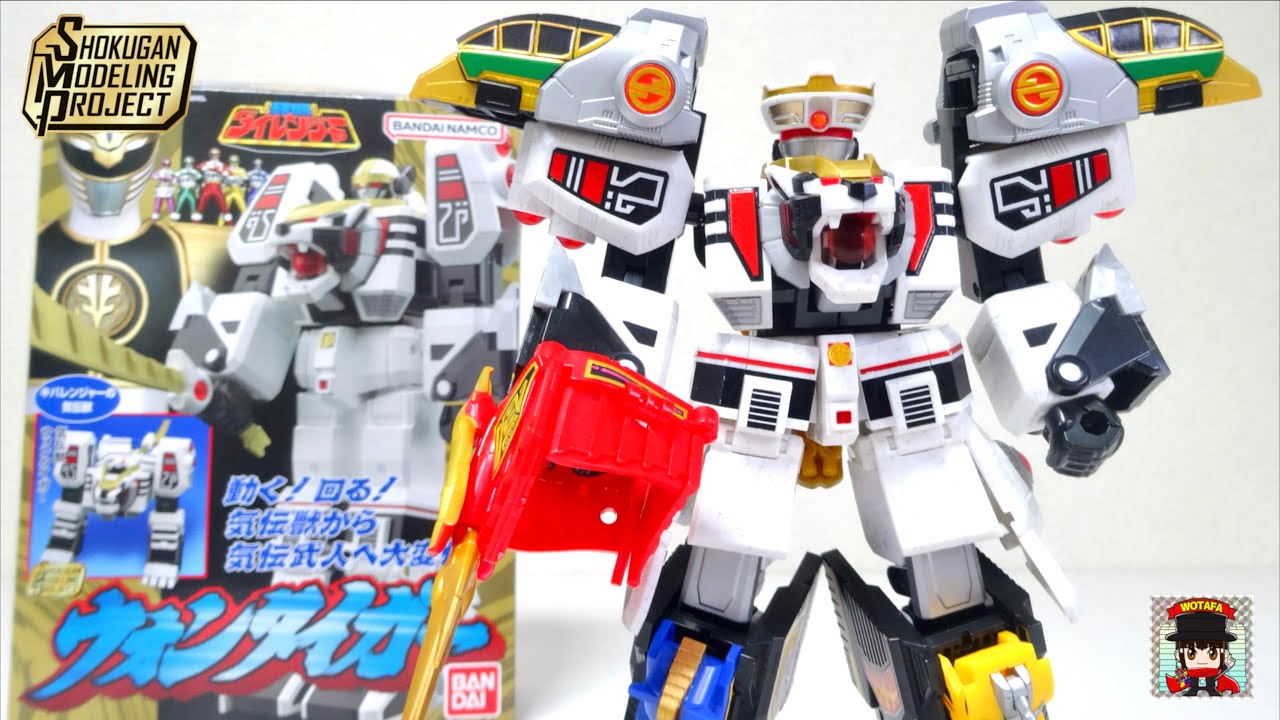
Yes. The US series Mighty Morphin Power Rangers (1994) was built by reusing this show’s suited-action and giant-robot footage, with only the drama scenes shot anew in America. Reused mainly: Giant-robo battle footage, Dairen-Oh → Thunder Megazord, Kiba Ranger → White Ranger, Won Tiger → White Tigerzord.
How many episodes is Gosei Sentai Dairanger, and when did it air?
50 episodes. It aired from February 19, 1993 to February 11, 1994.
Who is the “sixth warrior” of Gosei Sentai Dairanger?
Kiba Ranger. White KibaRanger, Kou, is a young boy who joins the team late — the "sixth warrior".
Can I still buy vintage Gosei Sentai Dairanger toys?
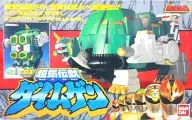
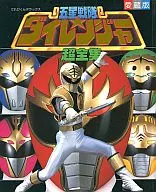
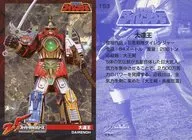
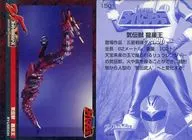
Yes. Figures and DX toys still circulate on Japan’s second-hand market (Suruga-ya, Mercari, Yahoo! Auctions). Real listings are linked throughout this page; overseas buyers can follow our buying guide.





![【中古】五星戦隊ダイレンジャー [レンタル落ち] 全10巻セット [マーケットプレイスDVDセット商品]](https://thumbnail.image.rakuten.co.jp/@0_mall/cometostore/cabinet/20241017-4/b06x94wp3g.jpg?_ex=600x600)
![【中古】 五星戦隊ダイレンジャー VOL.1 [DVD]](https://thumbnail.image.rakuten.co.jp/@0_mall/trmt-1/cabinet/306-1/b002g94vzi.jpg?_ex=600x600)
![五星戦隊ダイレンジャー DVD COLLECTION VOL.2 [ 八手三郎 ]](https://thumbnail.image.rakuten.co.jp/@0_mall/book/cabinet/2971/4988101222971.jpg?_ex=600x600)
![【中古】スーパー戦隊シリーズ 五星戦隊ダイレンジャー VOL.2 [DVD]](https://thumbnail.image.rakuten.co.jp/@0_mall/cometostore/cabinet/20240922-5/b002oct82s.jpg?_ex=600x600)


![NO.17[SR]:五星戦隊ダイレンジャー](https://cdn.suruga-ya.jp/pics_webp/boxart_m/gu420711m.jpg.webp)
![XG2-017[SR]:大連王](https://cdn.suruga-ya.jp/pics_webp/boxart_m/g8932752m.jpg.webp)
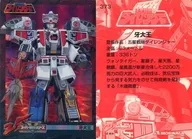
![57/99[レア]:牙大王](https://cdn.suruga-ya.jp/pics_webp/boxart_m/gn115063m.jpg.webp)
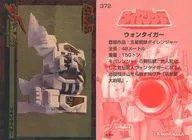
![XG2-011[N]:気伝武人ウォンタイガー](https://cdn.suruga-ya.jp/pics_webp/boxart_m/gg681532m.jpg.webp)
![17.[ノーマル]:リュウレンジャーたいひもだんしゃく](https://cdn.suruga-ya.jp/pics_webp/boxart_m/gl362802m.jpg.webp)
![GB.3-055[R]:五星戦隊ダイレンジャー ダイレンジャー](https://cdn.suruga-ya.jp/pics_webp/boxart_m/g6417533m.jpg.webp)



![五星戦隊ダイレンジャー超全集【電子書籍】[ てれびくん編集部 ]](https://thumbnail.image.rakuten.co.jp/@0_mall/rakutenkobo-ebooks/cabinet/0484/2000002210484.jpg?_ex=600x600)
![スーパー戦隊 (学研の図鑑) [ 東映株式会社 ]](https://thumbnail.image.rakuten.co.jp/@0_mall/book/cabinet/7882/9784054067882.jpg?_ex=600x600)

